Duration Dataset
Allows you to see the impact of video length on compression and energy consumption.
Download
mendevi download duration.db.xz.torrent
duration.json.xz (24 Mo).
duration.db.xz.torrent (28 Go).
Plots
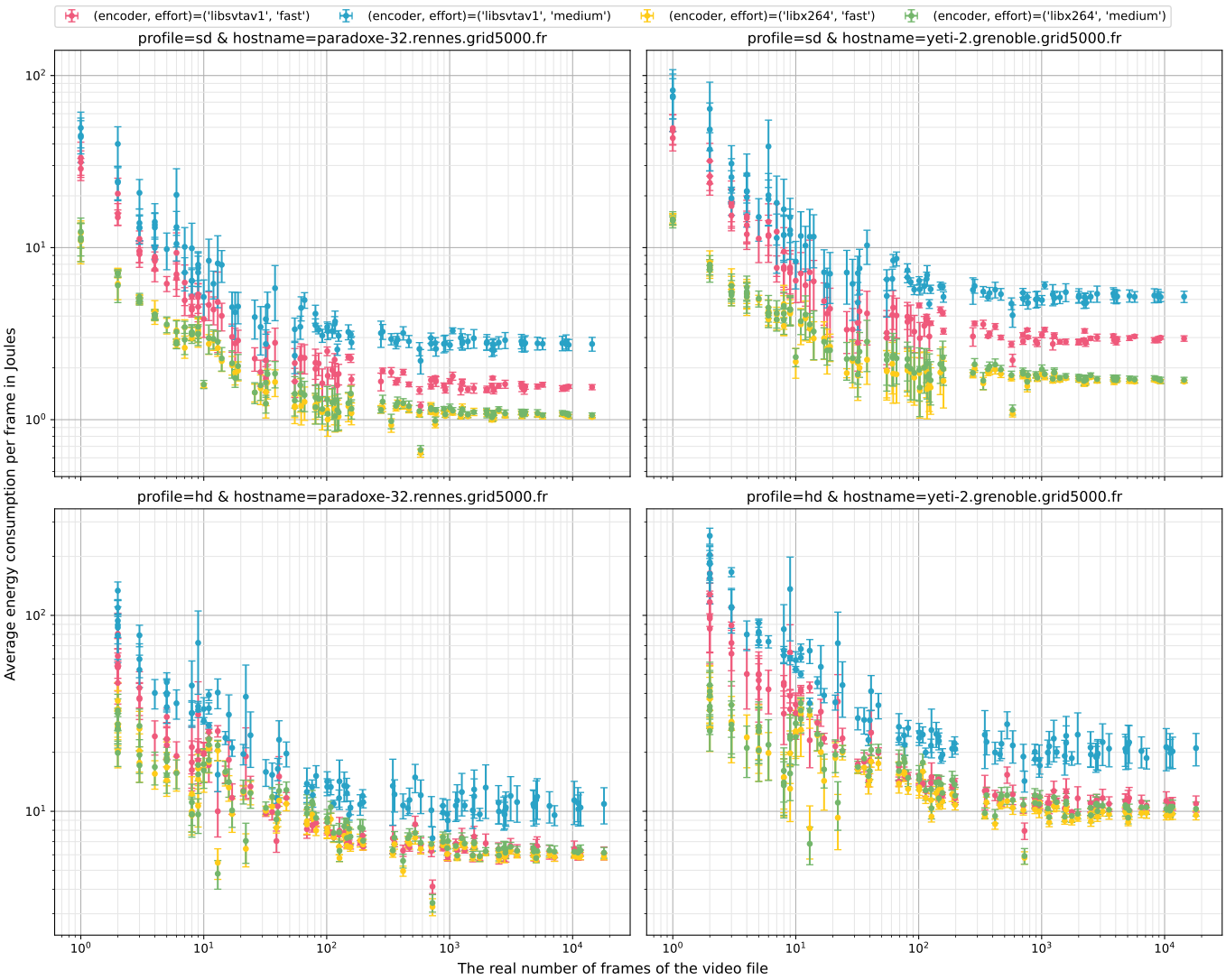
Encoding energy per frame as a function of the number of frames
mendevi plot '<duration.db>' -x nbr_frames -y energy_per_frame -e ref_stem -c '(encoder, effort)' -wy profile -wx hostname -t t_enc_encode
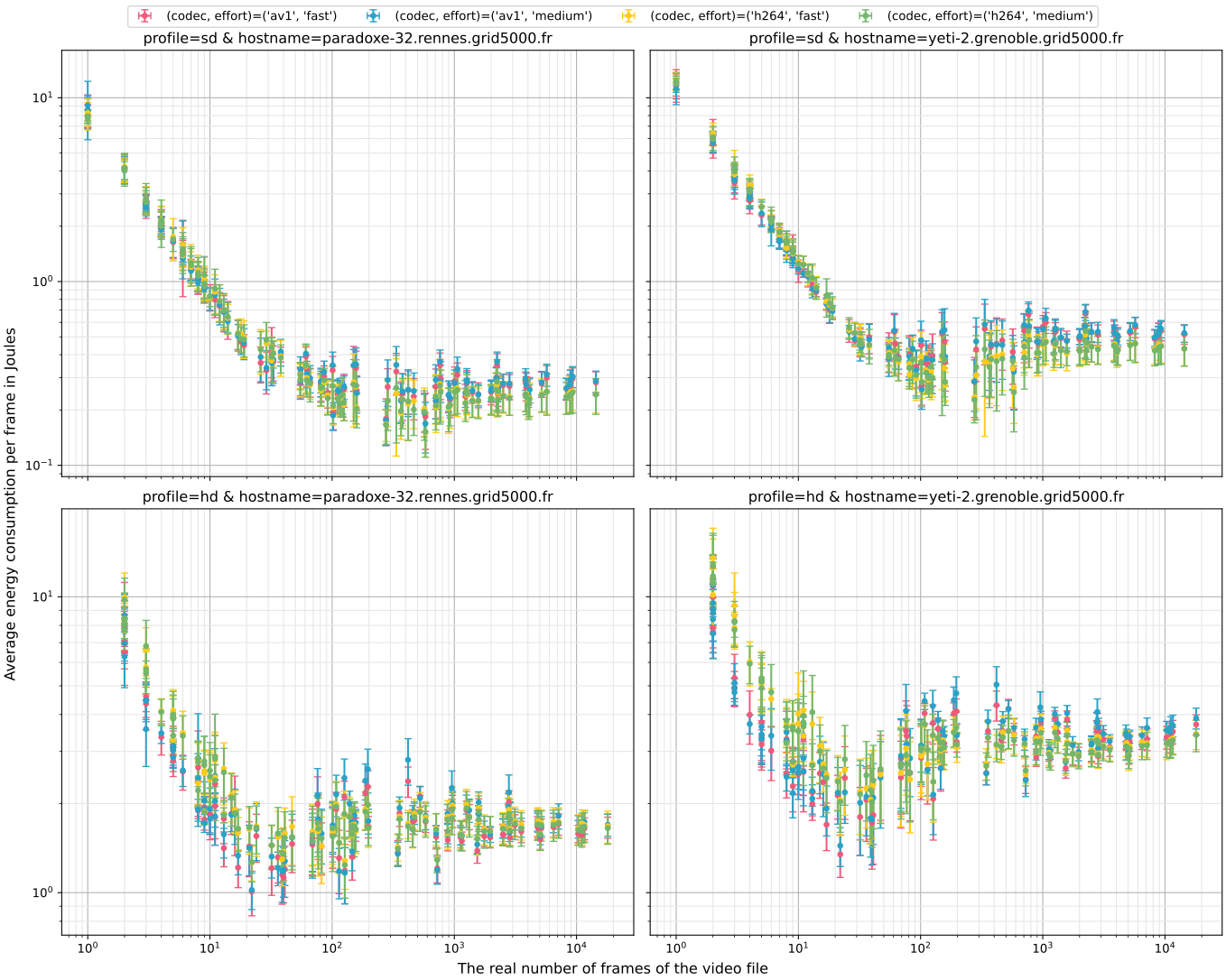
Decoding energy per frame as a function of the number of frames
mendevi plot '<duration.db>' -x nbr_frames -y energy_per_frame -e ref_stem -c '(codec, effort)' -wy profile -wx hostname -t t_dec_decode
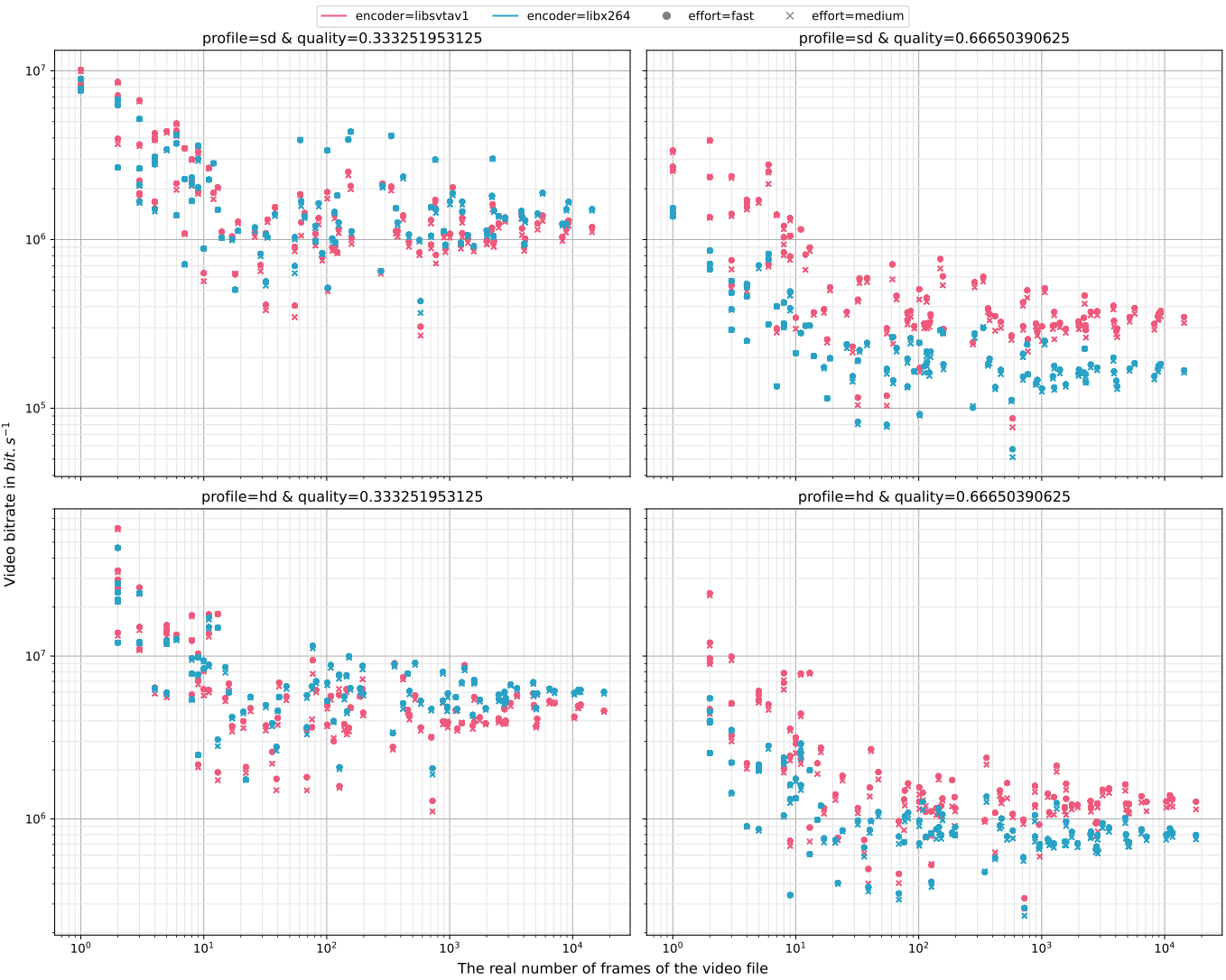
Bitrate as a function of the number of frame at constant quality
mendevi plot '<duration.db>' -x nbr_frames -y rate -c encoder -m effort -wx quality -wy profile -f "mode == 'vbr'"
Conclusion
When the video contains enough images, the average energy per frame no longer depends on the duration of the video. Thus, for videos with more than 300 images, ie more than 10 seconds, this effect becomes negligible.
These results are consistent with the UIT-R BT.500-15 (05/2023) which recommends 10-second sequences.
Reproduce
First, generate the video segments
The first step is to extract random length segments from a video.
The video used is bbb.mp4, the length of the segments follows a base-10 exponential probability distribution.
Next, perform the measurements
mendevi encode reference* -r 10 -c libx264 -c libsvtav1 -e fast -e medium -m cbr -m vbr -n 2
mendevi probe reference* sample* --no-vmaf
mendevi decode sample* -r 10