libx264 vs libopenh264 Dataset
Compare the libx264 and the libopenh264 encoders.
Download
mendevi download x264_vs_openh264.db.xz.torrent
x264_vs_openh264.json.xz (18 Mo).
x264_vs_openh264.db.xz.torrent (6.8 Go).
Plots
Distortion as a function of bitrate
mendevi plot '<x264_vs_openh264.db>' -x rate -y psnr -y vmaf -wx category -c '(encoder, profile)' -m effort

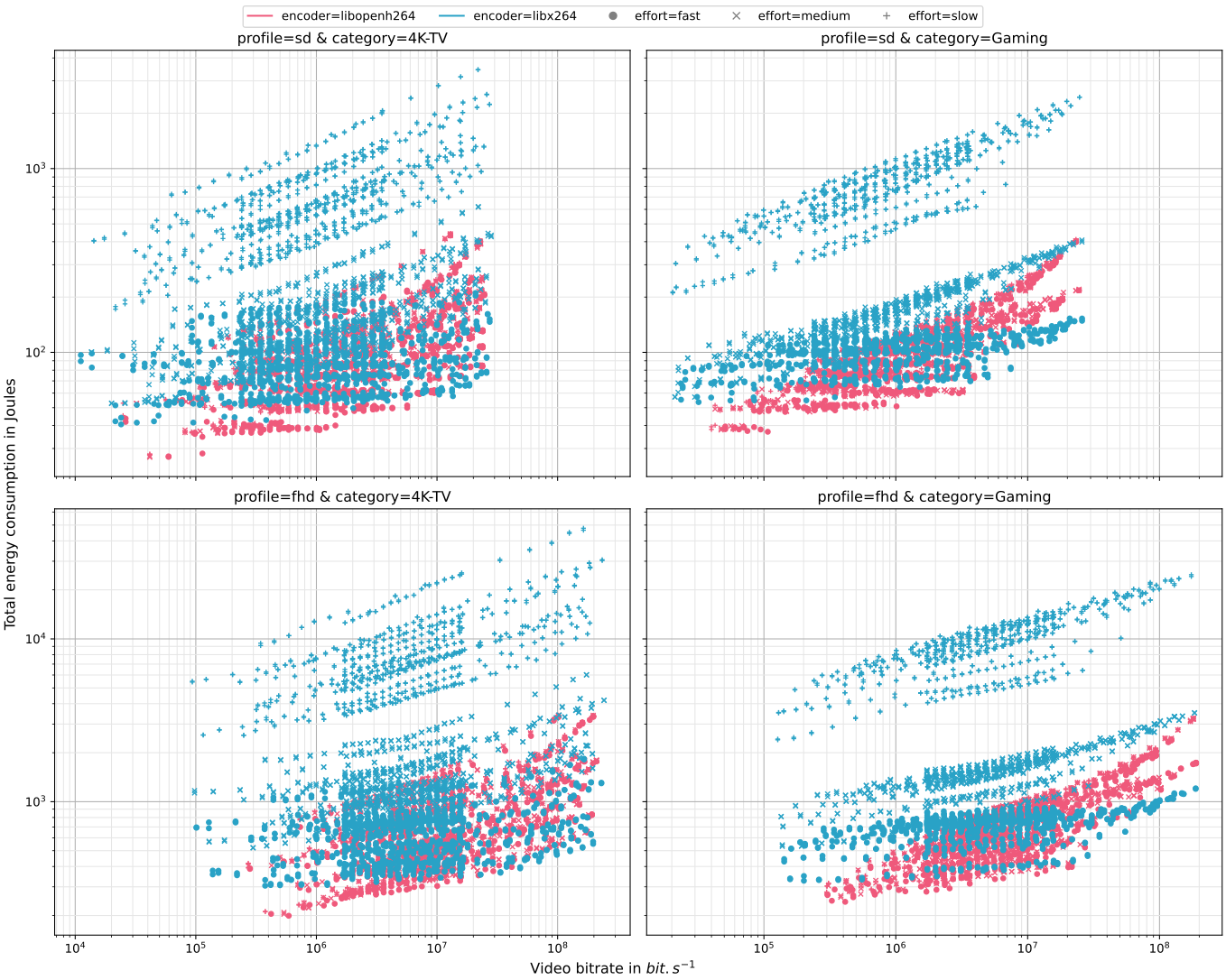
Consumption as a function of bitrate
mendevi plot '<x264_vs_openh264.db>' -x rate -y energy -wx category -wy profile -c encoder -m effort -f "category in {'4K-TV', 'Gaming'}"
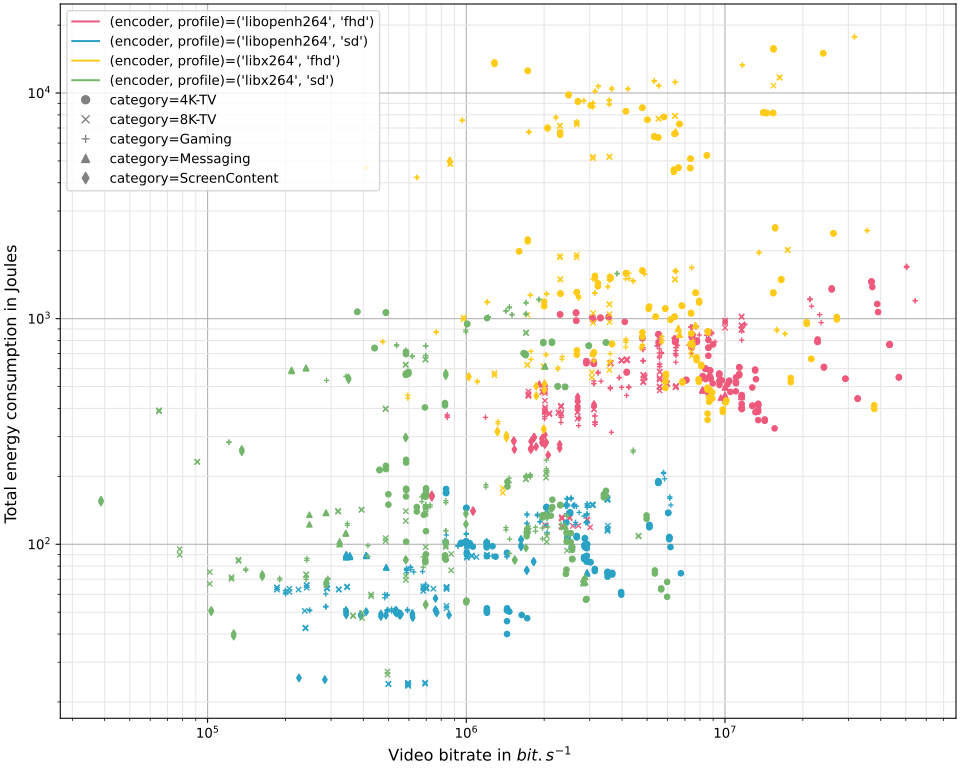
Compression efficiency for PSNR=35dB
mendevi plot '<x264_vs_openh264.db>' -x rate -y energy -c '(encoder, profile)' -m category -f '34.5<psnr<35.5'
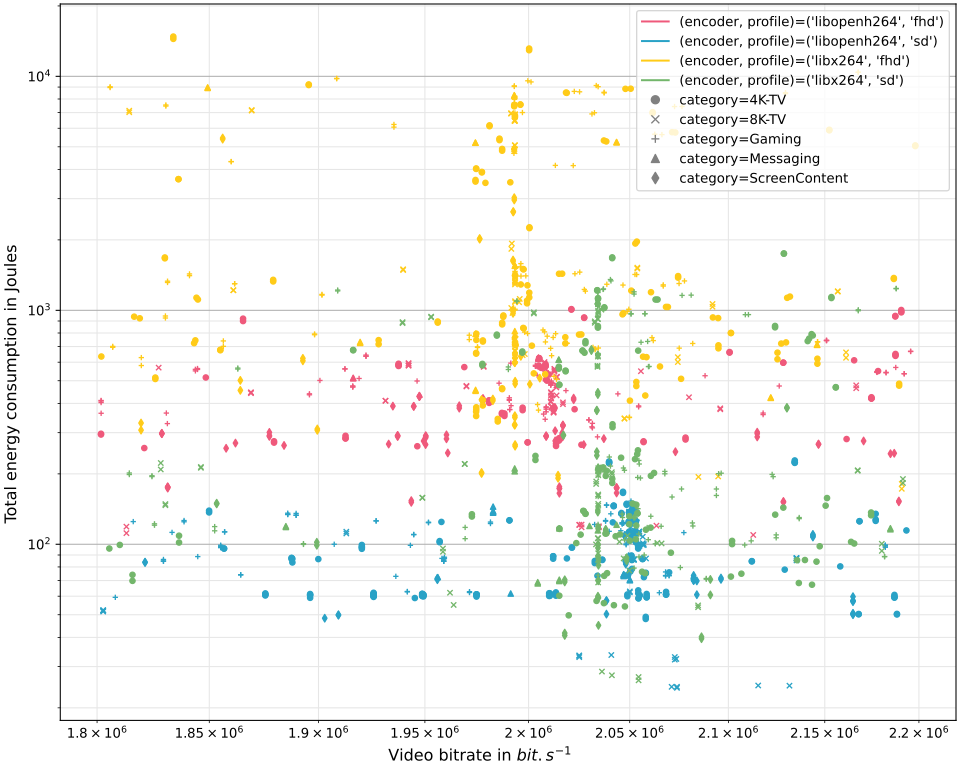
Compression efficiency for rate=2Mb/s
mendevi plot '<x264_vs_openh264.db>' -x rate -y energy -c '(encoder, profile)' -m category -f '1.8e6<rate<2.2e6'
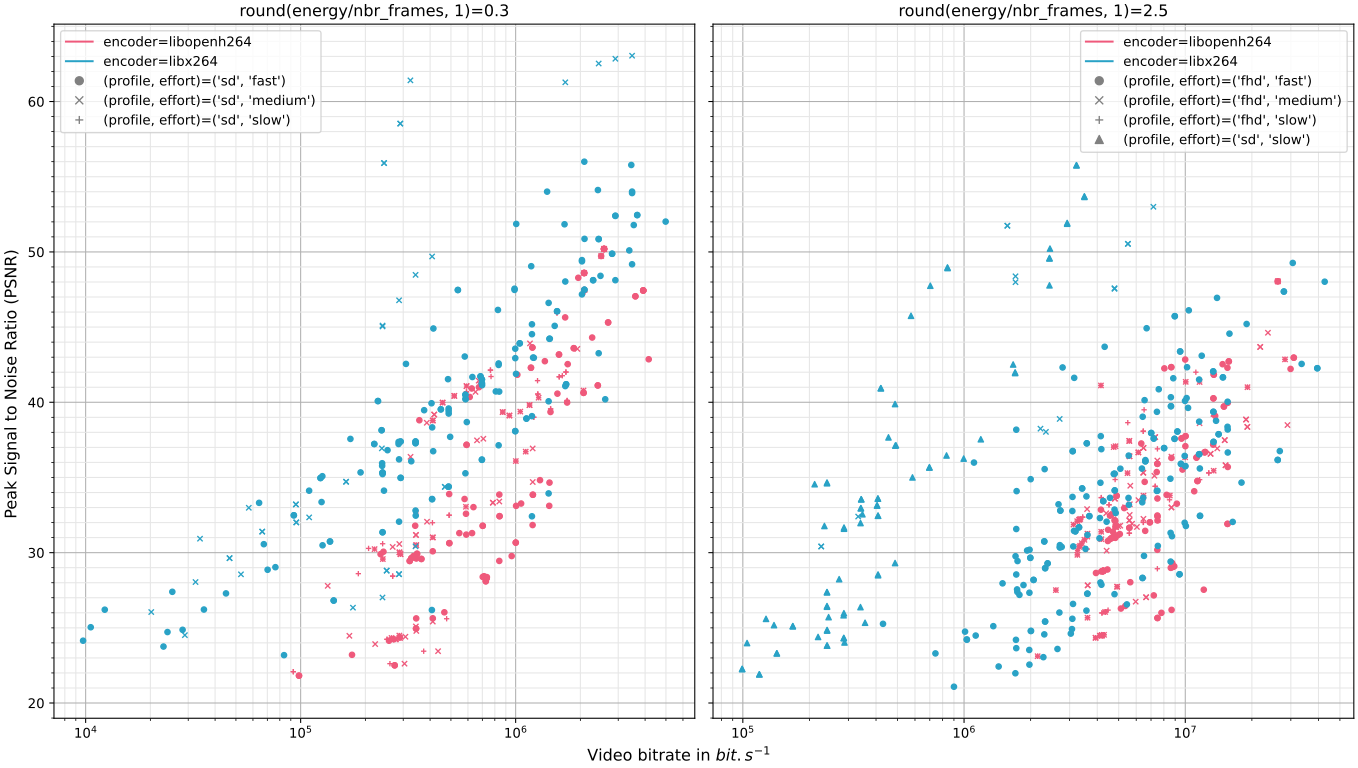
Compression efficiency for fixed energy
mendevi plot '<x264_vs_openh264.db>' -x rate -y psnr -wx 'round(energy/nbr_frames, 1)' -c encoder -m '(profile, effort)' -f "0.29<energy/nbr_frames<0.31 or 2.45<energy/nbr_frames<2.55"
Conclusion
The main consumption factor is the resolution, not the encoder.
At equal resolution and quality,
libopenh264consumes less energy thanlibx264.libx264has a large variance in energy consumption depending on the preset and the video content. It is therefore much less predictable thanlibopenh264.
Ressources
this paper (Performance comparison among popular implementations of H.264 encoders) compare the distortion of that codecs.
Reproduce
for video in ctc/*.mkv; do
    mendevi prepare $video -p sd
    mendevi prepare $video -p fhd
done
mendevi encode reference* -e fast -e medium -e slow -m cbr -m vbr -c libx264 -c libopenh264
mendevi probe sample_* --psnr --ssim --vif --vmaf