libx264 vs libopenh264 Dataset
Compare the libx264 and the libopenh264 encoders.
Download
mendevi download x264_vs_openh264.db.xz.torrent
x264_vs_openh264.json.xz (18 Mo).
x264_vs_openh264.db.xz.torrent (6.8 Go).
Plots
Distortion as a function of bitrate
mendevi plot '<x264_vs_openh264.db>' -x rate -y psnr -y vmaf -wx category -c '(encoder, profile)' -m effort

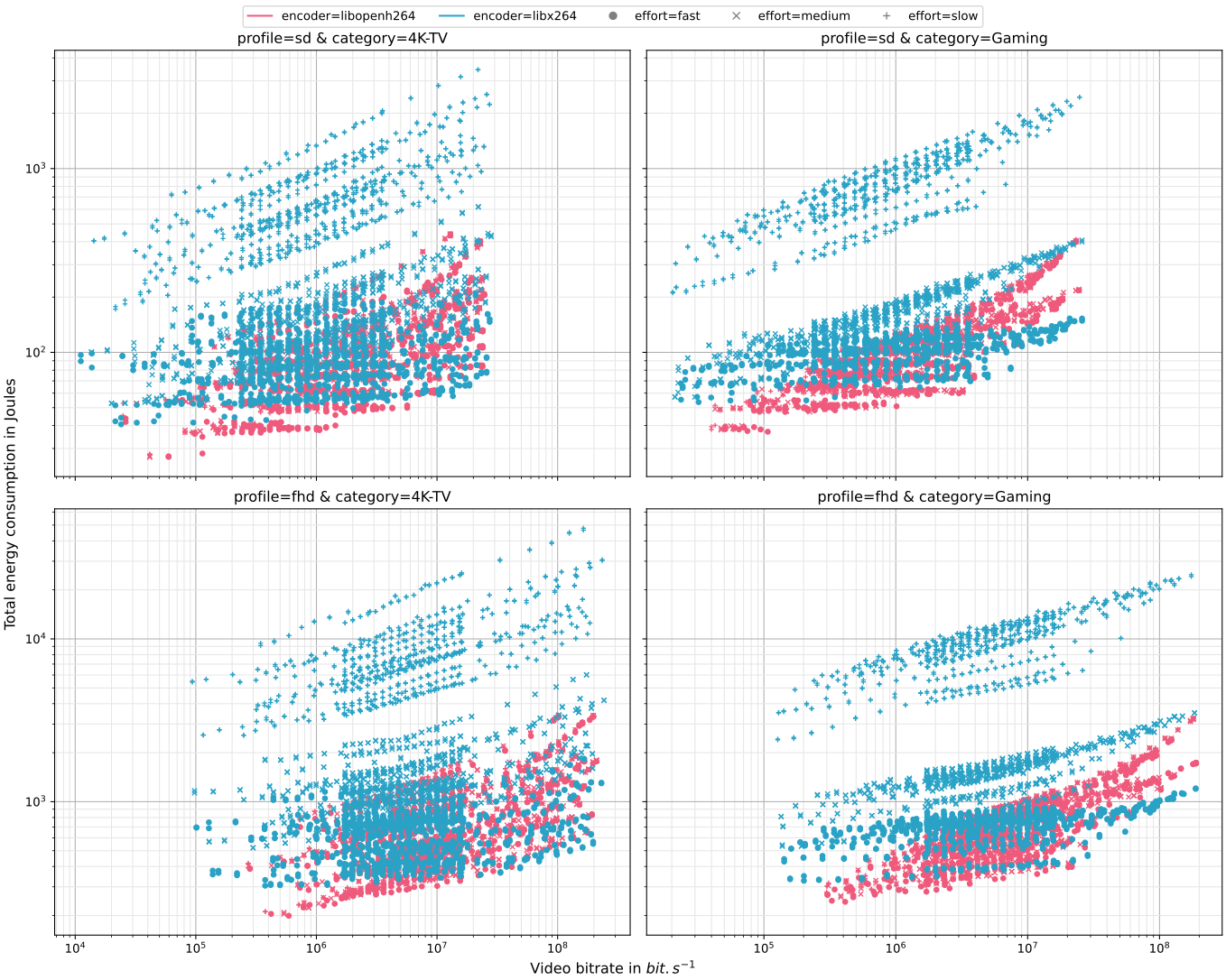
Consomation as a function of bitrate
mendevi plot '<x264_vs_openh264.db>' -x rate -y energy -wx category -wy profile -c encoder -m effort -f "category in {'4K-TV', 'Gaming'}"
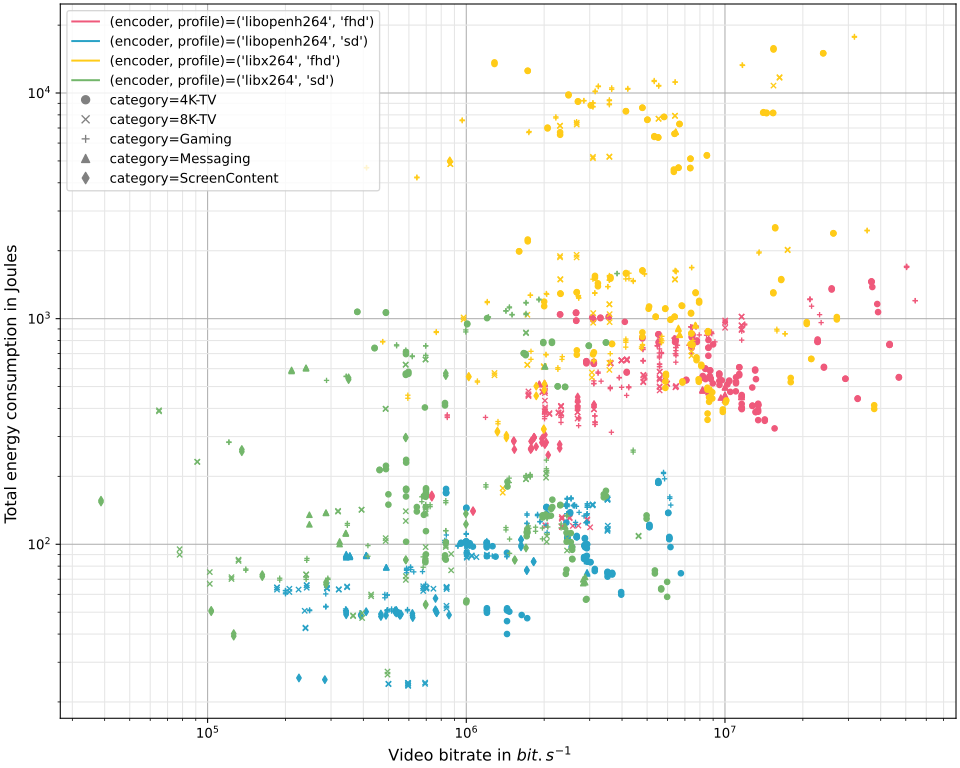
Compression efficiency for PSNR=35dB
mendevi plot '<x264_vs_openh264.db>' -x rate -y energy -c '(encoder, profile)' -m category -f '34.5<psnr<35.5'
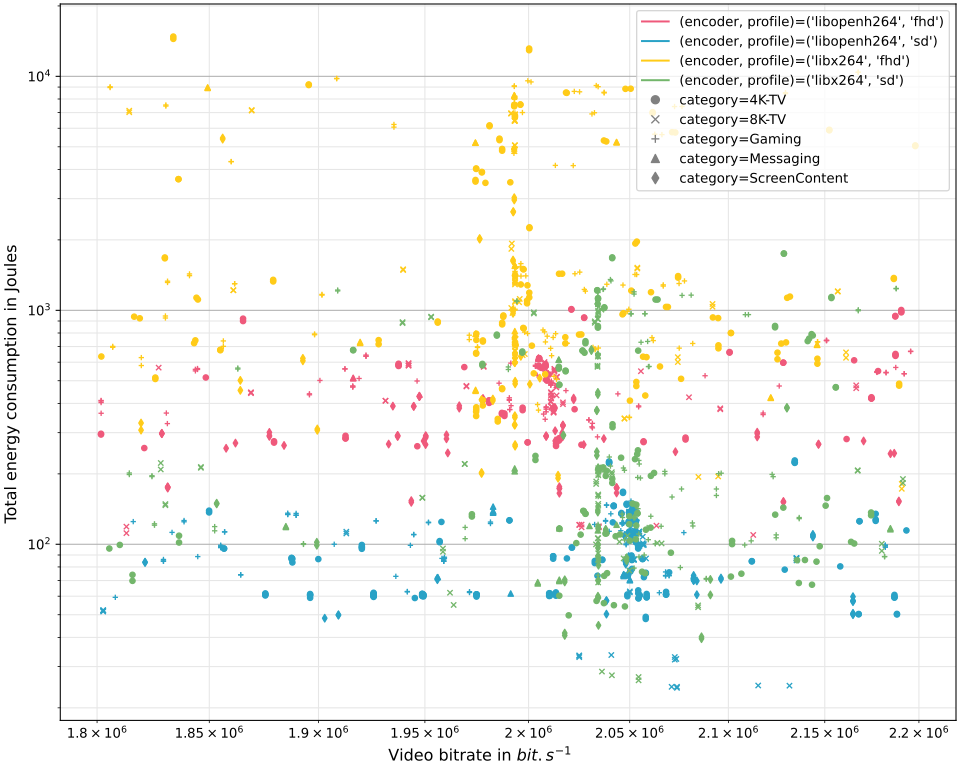
Compression efficiency for rate=2Mb/s
mendevi plot '<x264_vs_openh264.db>' -x rate -y energy -c '(encoder, profile)' -m category -f '1.8e6<rate<2.2e6'
Compression efficiency for fixed energy
mendevi plot '<x264_vs_openh264.db>' -x rate -y psnr -wx 'round(energy/nbr_frames, 1)' -c encoder -m '(profile, effort)' -f "0.29<energy/nbr_frames<0.31 or 2.45<energy/nbr_frames<2.55"

Conclusion
The main consumption factor is the resolution, not the encoder.
At equal resolution and quality,
libopenh264consumes less energy thanlibx264.libx264has a large variance in energy consumption depending on the preset and the video content. It is therefore much less predictable thanlibopenh264.
Reproduce
for video in ctc/*.mkv; do
    mendevi prepare $video -p sd
    mendevi prepare $video -p fhd
done
mendevi encode reference* -e fast -e medium -e slow -m cbr -m vbr -c libx264 -c libopenh264
mendevi probe sample_* --psnr --ssim --vif --vmaf