Multithread Dataset
It allows to perform an “experimental analysis of the impact of multi-threading on video encoding energy consumption”.
Download
mendevi download multithread.db.xz.torrent
multithread.json.xz (1.2 Mo).
multithread.db.xz.torrent (5.8 Go).
Plots
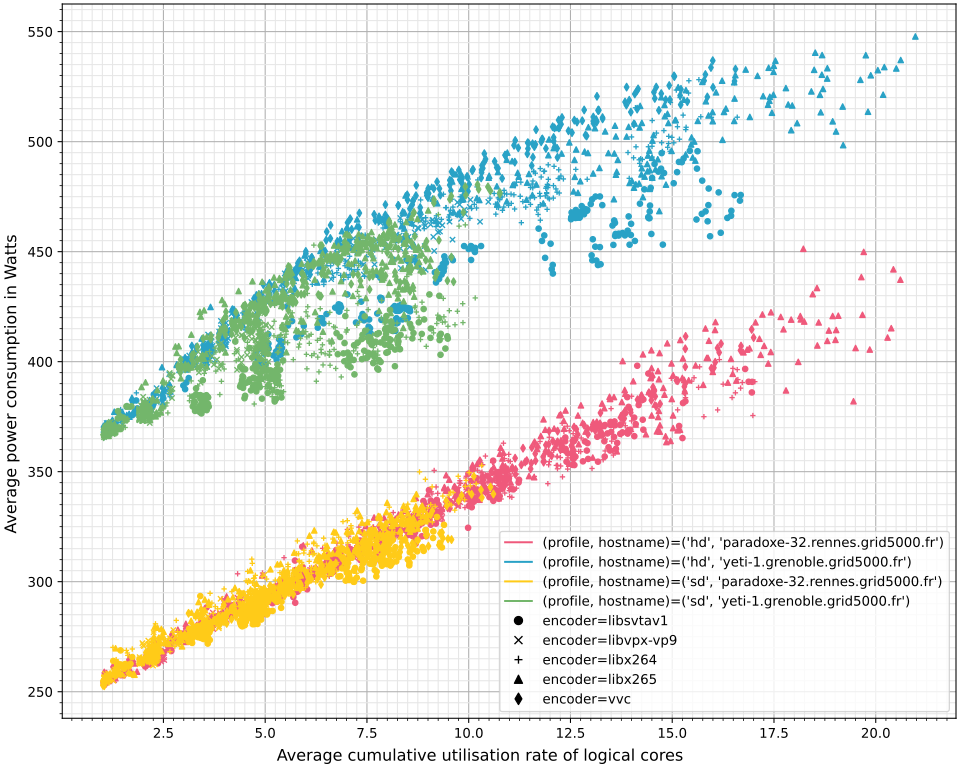
Power as a function of the logical core usage
mendevi plot '<multithread.db>' -x cores -y power -c '(profile, hostname)' -m encoder
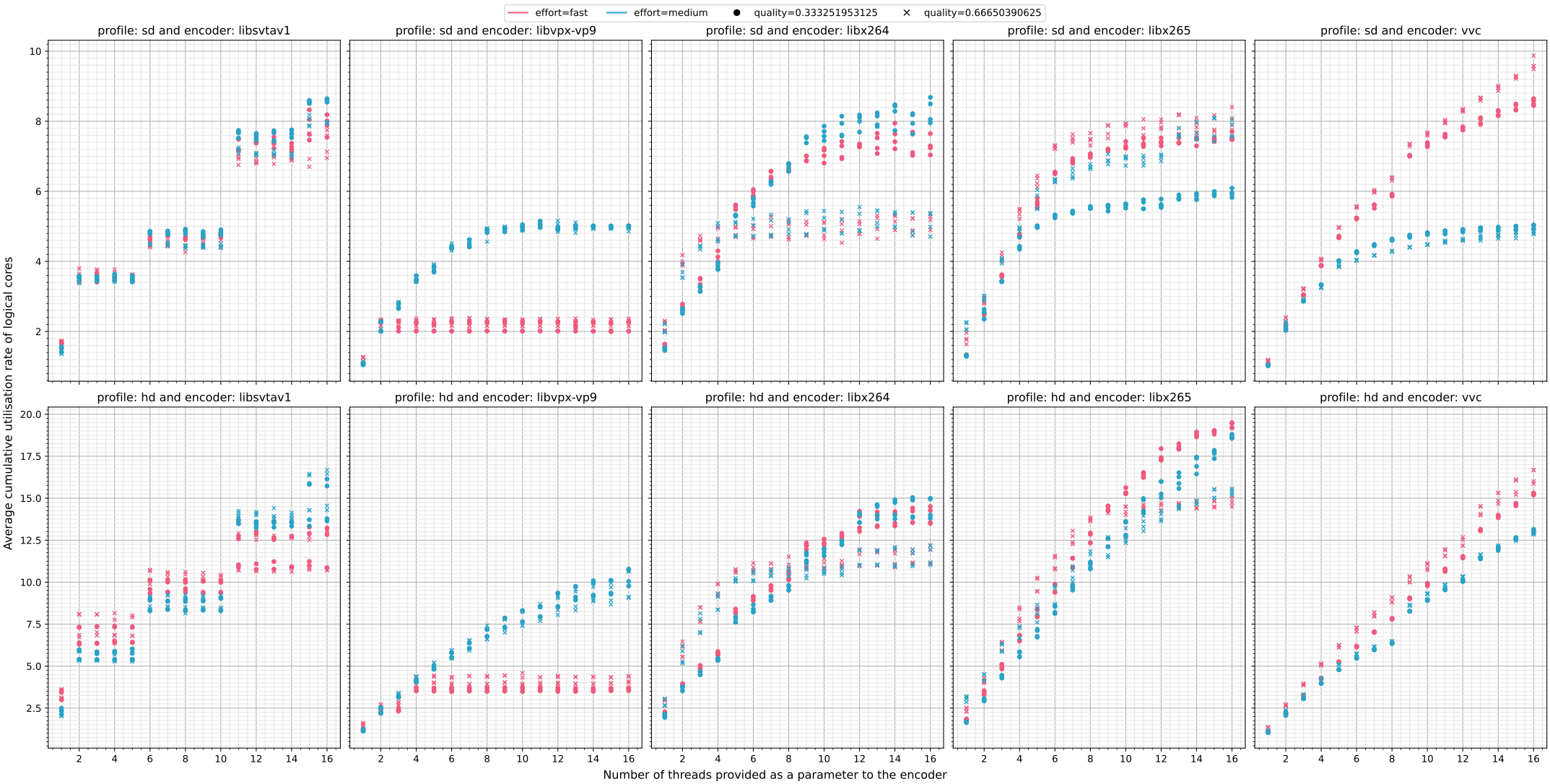
Logical core usage as a function of the provided number of threads
mendevi plot '<multithread.db>' -x threads -y cores -wx encoder -wy profile -c effort -m quality -f '"aerial" in name'
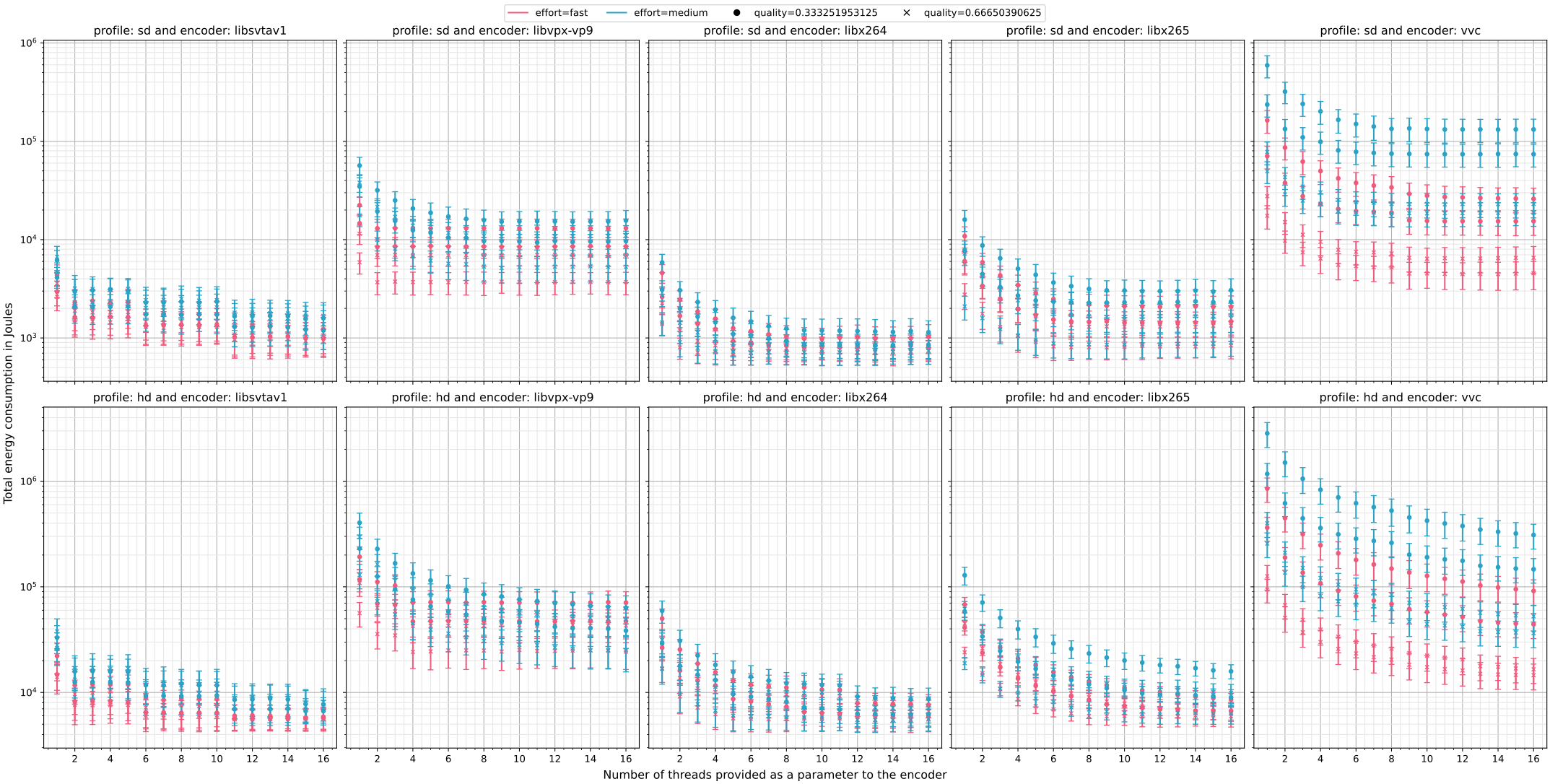
Final energy as a function of the provided number of threads
mendevi plot ‘<multithread.db>’ -x threads -y energy -wx encoder -wy profile -c effort -m quality -e ‘(threads, name)’
Conclusion
The more cores used, the faster the encoding, and therefore the less significant the static power consumption. The gain is therefore very high for a small number of threads. However, this gain becomes less significant when exceeding 8 threads. In addition, bit rate distortion decreases with the number of threads due to tiling. Thus, 8 threads seems optimal.
Reproduce
mendevi prepare -p sd netflix_aerial.mp4
mendevi prepare -p fhd netflix_aerial.mp4

mendevi encode reference* -e fast -e medium -n2 -t1 -t2 -t3 -t4 -t5 -t6 -t7 -t8 -t9 -t10 -t11 -t12 -t13 -t14 -t15 -t16

mendevi probe reference* sample* --no-lpips-alex --no-lpips-vgg --no-psnr --no-ssim --no-uvq --no-vmaf